Connect this guide with the rest of your visit in the Milan trip planner. Read how the research is made and what its sources establish.
At a glance
Start here
- Name the period or question you care about.
- Choose one anchor collection.
- Check current displays and booking on the official site.
- Add a second museum only when location and energy support it.
01
Choose by period before choosing by fame
Check the institution's current collection and visitor page after making that thematic choice. Temporary exhibitions, room access and booking rules can change. The Grande Brera expansion also means older guides may describe Brera as a single building when the current institution includes Palazzo Citterio.
- Name the period or question you care about.
- Choose one anchor collection.
- Check current displays and booking on the official site.
- Add a second museum only when location and energy support it.
02
Start with the question you want the museum to answer
A useful choice begins with an art-historical question. If you want to see how Italian painting developed across earlier centuries, Brera gives the clearest frame. If you want modern movements to unfold in sequence, Museo del Novecento is more direct. If you want to connect art collecting with banking palaces and civic history, Gallerie d’Italia makes its buildings part of the encounter.
This approach is more reliable than choosing by fame alone. All three can occupy a substantial visit, yet each rewards a different kind of attention. Decide whether your priority is a small group of canonical paintings, a continuous modern narrative, or a collection spread through richly finished rooms. Then check what is actually on view.
- Name one period or medium you most want to understand.
- Decide whether architecture should support the art or stay in the background.
- Leave temporary exhibitions out of the decision until you verify current programming.
03
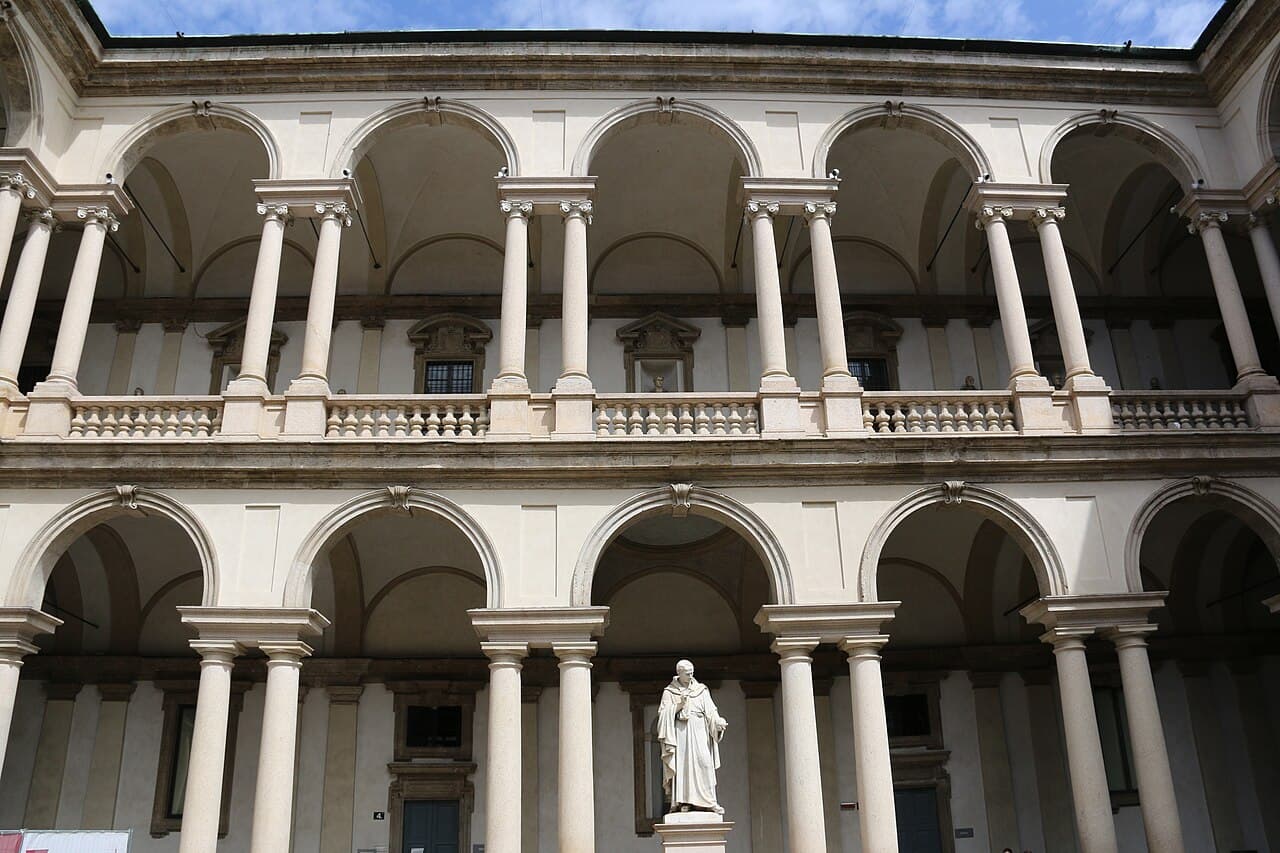
Choose Brera for an older Italian painting tradition
The Pinacoteca’s identity grew beside the Brera Academy. Its official history traces the first educational collection to 1776 and the gallery’s establishment to 1809. That origin still helps explain the visit: paintings are not merely decorative objects, but evidence for how artists learned, copied, compared, and argued across generations.
Brera suits visitors willing to slow down in front of individual works and follow changes in composition, devotional purpose, portraiture, and regional style. It also treats conservation as visible museum work. The transparent restoration laboratory, designed by Ettore Sottsass in 2001, turns care and technical study into part of what a visitor can notice.
- Read room labels for schools and chronology rather than chasing every famous name.
- Use the restoration laboratory as a reminder that collections are continually studied.
- Confirm which rooms and works are available on the official site.
04
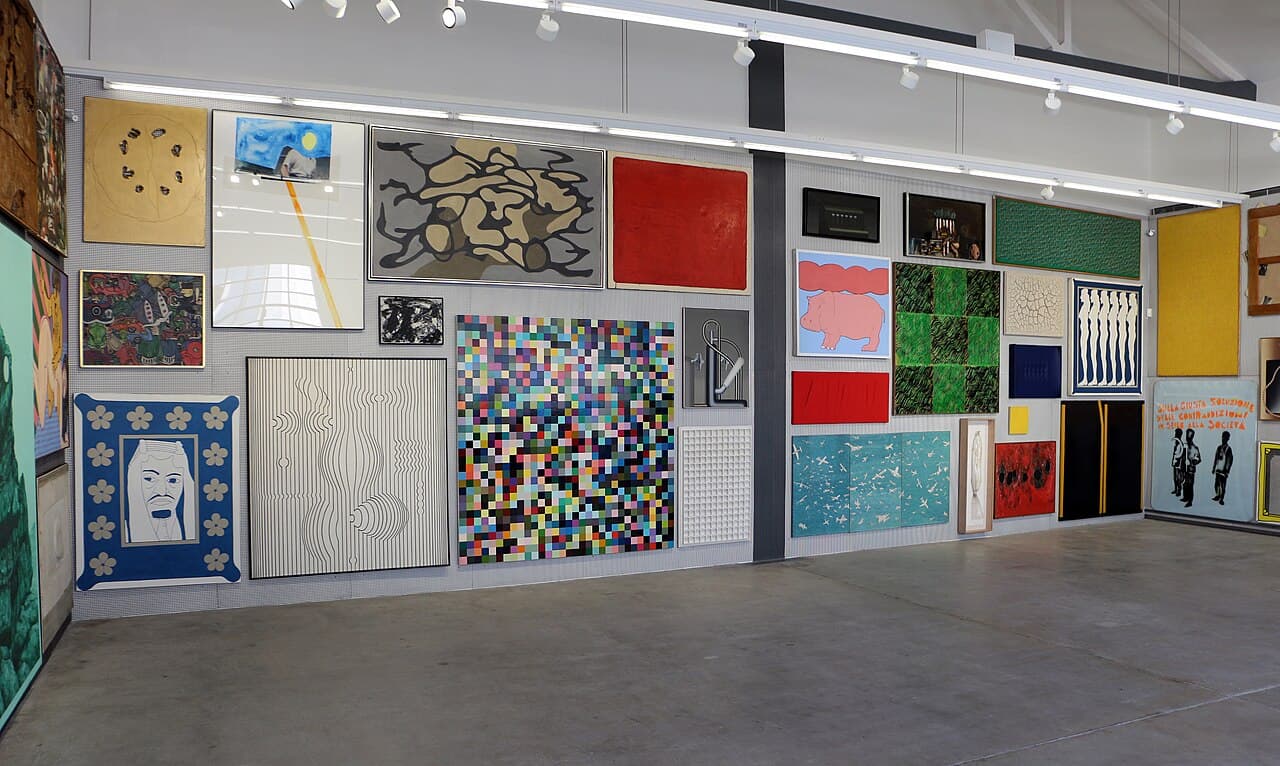
Choose Museo del Novecento for a modern sequence
Museo del Novecento’s regional museum record describes a selection of roughly 350 works and a chronological itinerary that begins with the international avant-gardes and Futurism. It then moves through major currents in twentieth-century Italian art. That sequence makes the museum useful when names and movements otherwise feel like disconnected labels.
A chronological museum is not necessarily a quick one. Give yourself permission to follow a few recurring questions: how artists represented speed, industry, the body, abstraction, or postwar change. The regional record notes that sections covering the 1920s through the 1950s were renewed in 2021, so older guidebook descriptions may not match the present arrangement exactly.
- Follow the route in order on a first visit.
- Pick two movements for closer looking instead of treating every room equally.
- Check the museum’s current notices for display changes.
05
Choose Gallerie d’Italia for collections and interiors together
The Milan branch of Gallerie d’Italia occupies three historic buildings. Its official collection guide separates a nineteenth-century itinerary from Cantiere del ’900, its twentieth-century holdings, and a Caveau display. The result is not one uninterrupted survey. It is a set of linked collection experiences shaped by rooms that once had other institutional purposes.
That variety works well for visitors who enjoy changing scale and atmosphere. The three historic buildings and the Caveau can compete with the art for attention, so do not plan to absorb everything. Choose either the nineteenth century or Cantiere del ’900 as the main line, then treat the other areas as extensions if attention and time remain.
- Study the official collection outline before arriving.
- Let one collection area be the visit’s anchor.
- Notice how former institutional rooms change the way objects are seen.
06
Match the museum to your attention span
Brera rewards concentrated looking at paintings with long historical lives. Museo del Novecento works through progression, so skipping heavily can blur the logic of its route. Gallerie d’Italia offers the easiest way to alternate between art and architectural detail, but its several strands can make an unfocused visit feel diffuse.
Set a stopping rule before entering: a defined period, a fixed number of rooms, or one complete itinerary. Museum fatigue is not a test of commitment. A shorter visit with three remembered works is more useful than racing through every gallery. Official maps, apps, and collection pages can help identify a route without imposing a checklist.
- Plan one primary route and one optional extension.
- Pause before changing floors or collection periods.
- Keep time for one unplanned work that holds your attention.
07
Verify the live visit, not just the institution
Collection identity changes slowly; visitor conditions do not. Gallerie d’Italia’s planning page recommends online booking and provides current access information. Brera links its ticketing, hours, entrances, accessibility guidance, map, and official app from the museum site. Those are the pages to consult after choosing the collection, not months in advance.
On the day, check opening status, the last admission rule, temporary room closures, and whether a chosen exhibition needs a separate reservation. If a particular work is the reason for your visit, search the museum’s notice or collection record rather than assuming it is on display. Build the plan around verified access, not a photograph in an old article.
- Use the museum’s own ticket link.
- Recheck notices on the morning of the visit.
- Ask the museum directly about a must-see work if its status is unclear.
Useful answers
Reader questions
Which Milan museum is most useful for older Italian painting?
Pinacoteca di Brera is the clearest choice among these three. Its collection and institutional history are tied to the academy and to the study of Italian painting across earlier periods. Check the official site for the current display before visiting for one specific work.
Sources: Pinacoteca di Brera; Pinacoteca di BreraWhere should I go for twentieth-century Italian art?
Museo del Novecento is built around that subject, with a chronological itinerary beginning with the avant-gardes and Futurism and continuing through major Italian movements. Gallerie d’Italia’s Cantiere del ’900 is a useful alternative if you also want historic interiors and other collection areas.
Sources: Regione Lombardia; Gallerie d’ItaliaCan I rely on a guidebook for opening hours and displayed works?
No. Use guidebooks for context, then check the museum’s official visit, ticketing, and notice pages for the date you plan to attend. Displays, rooms, temporary exhibitions, and entry conditions can change.
Sources: Pinacoteca di Brera; Gallerie d’ItaliaIs Gallerie d’Italia only a modern art museum?
No. Its Milan collection guide identifies a nineteenth-century itinerary, Cantiere del ’900, and the Caveau, all distributed through three historic buildings. Decide which strand will anchor your visit.
Sources: Gallerie d’ItaliaRead the evidence
Sources and further reading
These sources support the relevant sections above. Plans and comparisons are editorial suggestions. Check operators for current arrangements.
- Pinacoteca di Brera ↗Pinacoteca di Brera · Research date 14 September 2026
Official institutional history, academy origins, Palazzo Citterio expansion, restoration laboratory, visit links, and app information.
- Collection areas ↗Pinacoteca di Brera · Research date 14 September 2026
Official collection chronology and curatorial areas spanning Italian schools from the thirteenth through nineteenth centuries.
- Museo del Novecento Milano ↗Regione Lombardia · Research date 14 September 2026
Recognized-museum record describing the displayed selection, chronological route, Futurism opening, and renewed twentieth-century sections.
- Milan collections ↗Gallerie d’Italia · Research date 14 September 2026
Official outline of the three historic buildings, nineteenth-century itinerary, Cantiere del ’900, and Caveau.
- Plan your visit: Milan ↗Gallerie d’Italia · Research date 14 September 2026
Official booking recommendation, location, current visitor services, and live planning information.