Connect this guide with the rest of your visit in the Milan trip planner. Read how the research is made and what its sources establish.
At a glance
Start here
- Treat the castle as a system of collections, not one linear museum.
- Use the building’s history to frame the objects inside it.
- Choose ancient art, applied arts, or coins as a primary route.
- Check current room openings and access before visiting.
01
Begin with the building’s changing identity
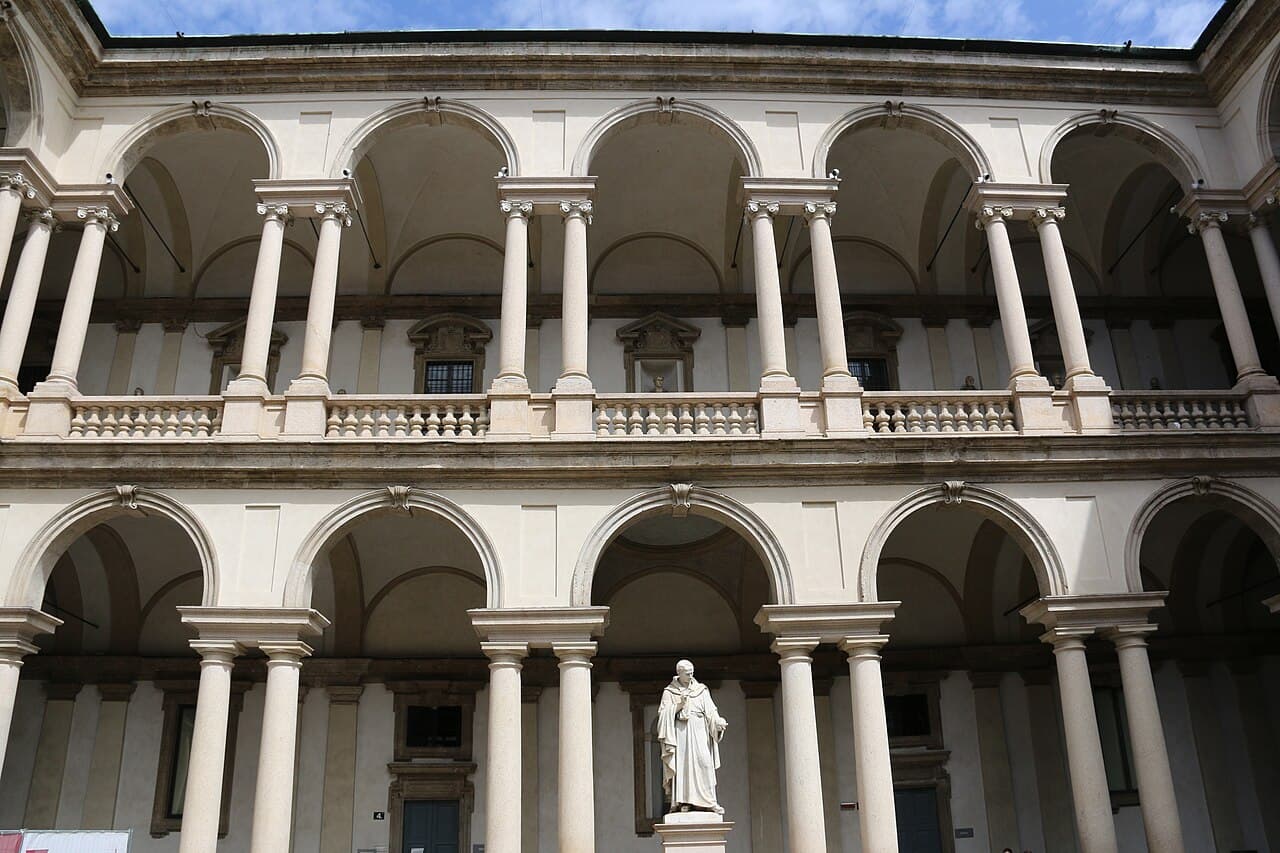
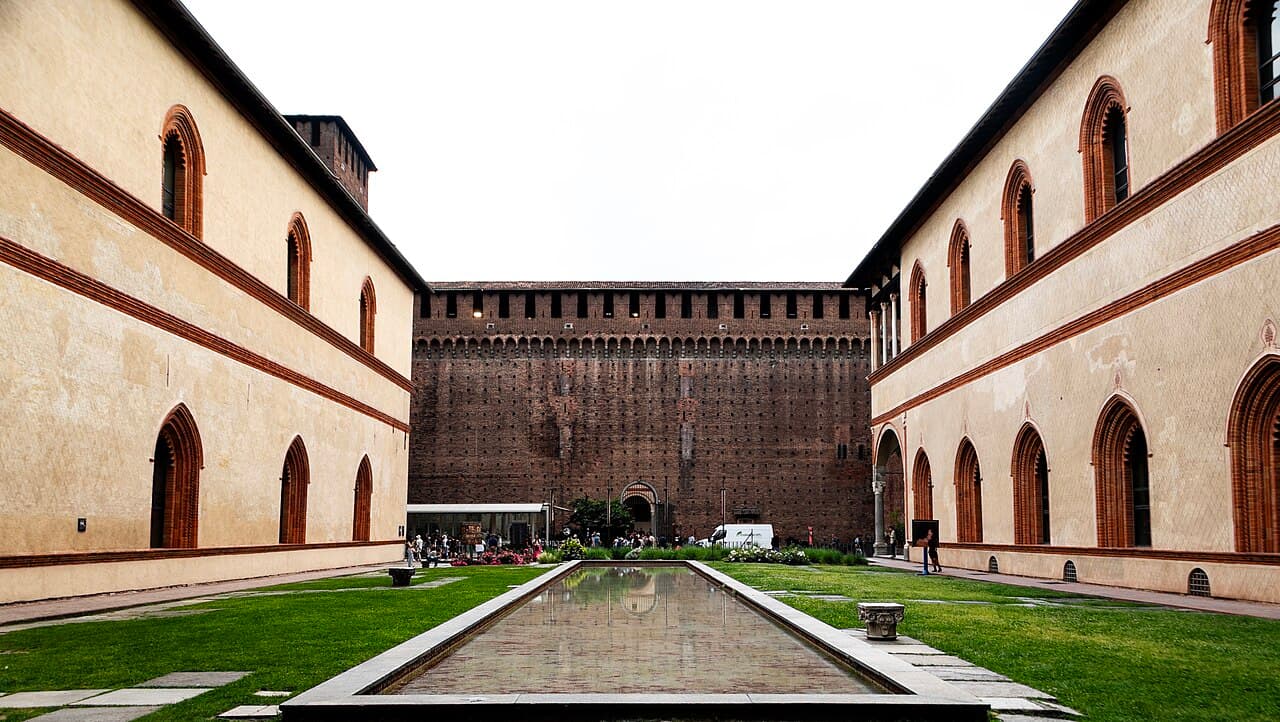
The castle’s official history traces a Visconti fortress built between 1360 and 1370, partial demolition during the Ambrosian Republic, reconstruction under Francesco Sforza, and development as a ducal court associated with artists including Leonardo and Bramante. Later foreign governments used it as a barracks, changing its relationship with the city again.
At the end of the nineteenth century, Luca Beltrami’s reconstruction and restoration helped transform it into a museum complex. That history is not merely an introduction before the ‘real’ objects. It explains why military, residential, civic, and museological identities overlap. Courtyards, towers, decorated rooms, and collections all participate in the visitor’s interpretation.
- Distinguish Visconti, Sforza, barracks, restoration, and museum phases.
- Treat restored fabric as an interpretation of history.
- Use courtyards and circulation to orient the collection visit.
02
Understand the castle as a museum system
Regione Lombardia’s main record for the artistic collections lists the Museo d’Arte Antica, applied-art collections, musical-instrument museum, and numismatic cabinet. Its ancient-art record also identifies the Pinacoteca, the Pietà Rondanini room, and the Sala delle Asse. These components differ in medium, chronology, and research purpose, even when they share a building and administration.
Make a hierarchy before entering. Select one primary collection, one secondary collection, and a final object or room if energy remains. This protects the visit from the castle’s apparent convenience: many museums under one roof can still require repeated shifts of attention. Completion is not the goal; a coherent argument is.
- Choose one collection as the main route.
- Add only one contrasting collection.
- Confirm that the intended rooms are currently accessible.
03
Use ancient art to connect objects with Milan
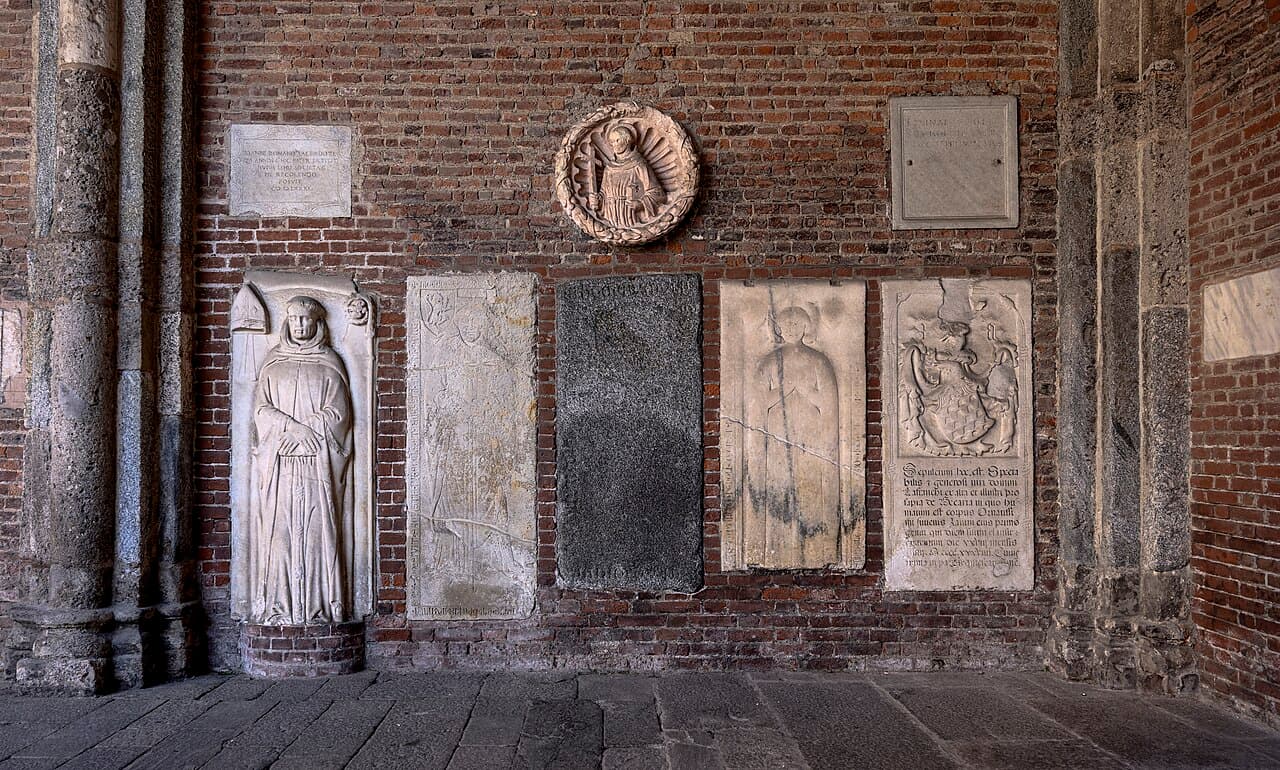
The recognized-museum record describes sculpture from late antiquity through the medieval and Renaissance periods, including works connected with Milan and Lombardy that came from excavations or from churches and buildings no longer standing. The same route integrates the Pietà Rondanini and the Sala delle Asse, while the Pinacoteca extends from Lombard late Gothic art to Canaletto.
This breadth works best when place is the organizing question. Ask how an object moved from tomb, church, demolished building, court, or collector into a civic museum. The castle then becomes a repository for fragments of Milan as well as a monument in its own right. Labels about provenance may matter more than a famous attribution.
- Read provenance before style.
- Look for objects displaced from lost Milanese buildings.
- Treat the Pietà and Sala delle Asse as focused stops, not the entire museum story.
04
Applied arts turn craft into social history
The applied-art collections document work by carvers, ceramicists, sculptors, silversmiths, goldsmiths, armourers, tapestry makers, and weavers from the eleventh through eighteenth centuries. The regional record identifies Renaissance ceramics from several production centres, later Lombard makers, Meissen porcelain, and a section following six centuries of furniture.
Rather than dividing useful object from fine art, follow labor and material. Compare how wood, clay, metal, fiber, and porcelain constrain form and display status. Ask which objects were handled, worn, sat upon, exchanged, or used to furnish rooms. The collection reveals design history long before modern industrial design became a named field.
- Choose one material to follow across rooms.
- Look for evidence of tools, workshops, and patronage.
- Compare ceremonial display with daily use.
05
Coins and medals compress history into small objects
The numismatic cabinet holds coins and medals extending from archaic issues of Asia Minor. A selection is displayed within the Pinacoteca route, while the regional record says consultation of the full collection is by appointment. That difference between public display and study collection is important across a large civic museum system.
Small objects demand a slower mode than monumental sculpture. Look for ruler, city, inscription, metal, and denomination, then ask how an image circulated through exchange. A medal and a painted portrait may present authority differently because one moves hand to hand and the other occupies a wall. The castle allows that cross-medium comparison within one institutional complex.
- Read both sides of a coin or medal when the display permits.
- Compare portable political images with painted ones.
- Do not assume the study collection is available without appointment.
06
Build a route that can survive room changes
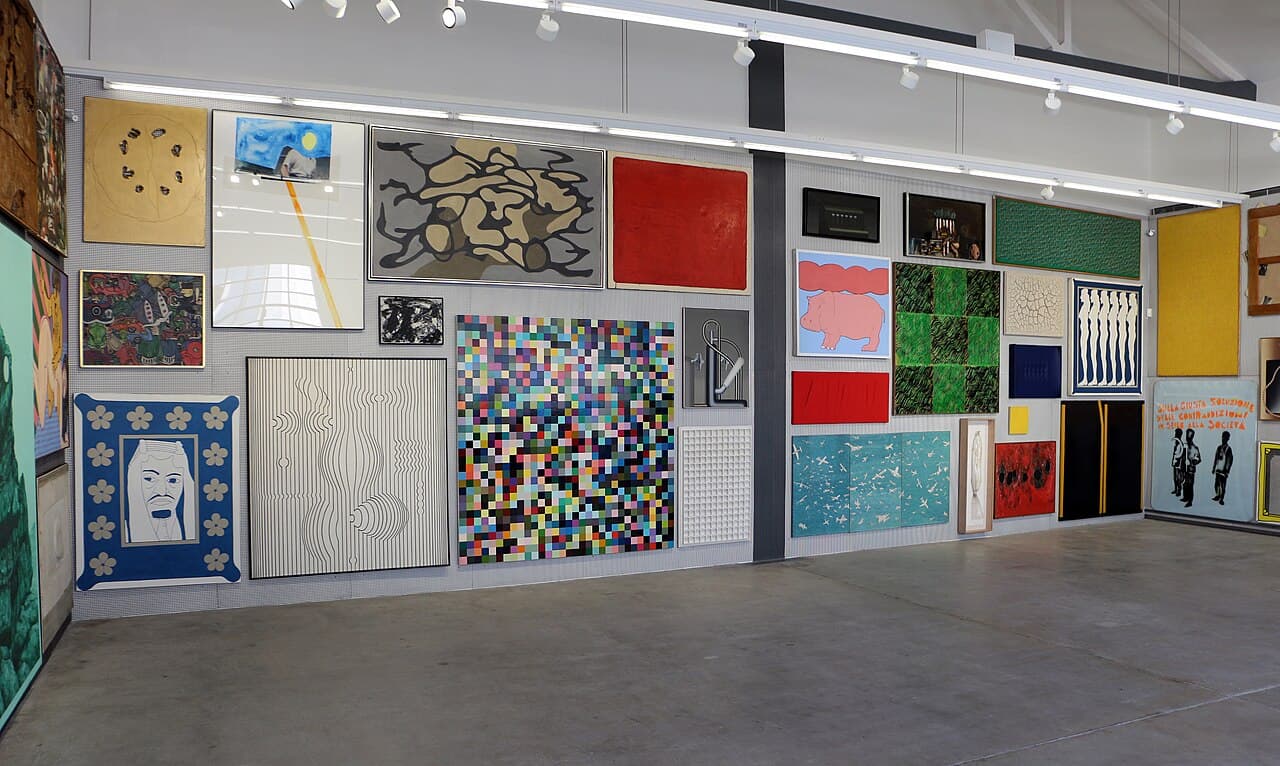
A resilient route depends on a question rather than one object. For Milan and power, combine the castle’s phases, ducal imagery, sculpture, and coins. For making, combine furniture, ceramics, metalwork, textiles, and instruments if open. For changing museum display, compare Beltrami’s reconstructed monument with later installations around Michelangelo or Leonardo.
Before arrival, use the official castle pages for opening status, tickets, temporary closures, and route changes. The regional descriptions establish collection scope but do not guarantee that every room or object is currently visible. If a key section is closed, preserve the question and substitute another collection rather than racing to rebuild the whole day.
- Write one question at the top of the route.
- Choose two collections that answer it differently.
- Recheck operational notices on the day.
Useful answers
Reader questions
Is Castello Sforzesco a single museum?
No. It is a historic castle housing several civic collections, including ancient art, applied arts, musical instruments, coins and medals, and painting.
Sources: Regione Lombardia; Regione LombardiaWhere is Michelangelo’s Pietà Rondanini in Milan?
The regional ancient-art record places it within the Castello Sforzesco museum route in a dedicated installation. Verify the room’s current access on the official castle site before going specifically for it.
Sources: Regione Lombardia; Castello Sforzesco, Comune di MilanoWhat do the applied-art collections cover?
They span multiple crafts and materials, including carving, ceramics, precious metalwork, armour, tapestry, weaving, porcelain, and furniture. The regional description frames them across centuries of production rather than as one decorative style.
Sources: Regione LombardiaCan I see the entire coin collection on a normal visit?
No. Regione Lombardia states that a selection is displayed in the Pinacoteca route and that the full numismatic collection can be viewed by appointment. Confirm current procedures directly.
Sources: Regione LombardiaRead the evidence
Sources and further reading
These sources support the relevant sections above. Plans and comparisons are editorial suggestions. Check operators for current arrangements.
- The history of the castle ↗Castello Sforzesco, Comune di Milano · Research date 14 September 2026
Visconti fortress, Ambrosian demolition, Sforza court, foreign barracks use, Beltrami restoration, and museum conversion.
- Raccolte Artistiche del Castello ↗Regione Lombardia · Research date 14 September 2026
Recognized-museum system, principal artistic collections, research holdings, and public scope.
- Museo d’Arte Antica ↗Regione Lombardia · Research date 14 September 2026
Sculpture chronology and provenance, Pinacoteca scope, Pietà Rondanini installation, and Sala delle Asse.
- Raccolte d’Arte Applicata ↗Regione Lombardia · Research date 14 September 2026
Crafts, materials, chronology, ceramic and porcelain groups, tapestries, and six-century furniture section.
- Gabinetto Numismatico e Medagliere ↗Regione Lombardia · Research date 14 September 2026
Coin and medal collection range, selection displayed in the Pinacoteca, and appointment requirement for the full collection.